

What Causes Tennis Elbow and How Can It Be Treated in Sunnyvale, TX?
At OmniSpine Pain Management in Sunnyvale, TX, our team provides personalized tennis elbow evaluation and treatment support to help patients better understand their symptoms and explore options for improving arm comfort and function. Our team focuses on identifying factors that may contribute to elbow pain, including repetitive movements, tendon-related concerns, and daily activities that place stress on the arm. Tennis elbow care begins with understanding each patient’s condition, symptoms, and personal health goals. Through comprehensive evaluations and individualized treatment planning. For more information, contact us today or book an appointment online. We are conveniently located at 270 S Collins Rd, #200 Sunnyvale, TX 75182.
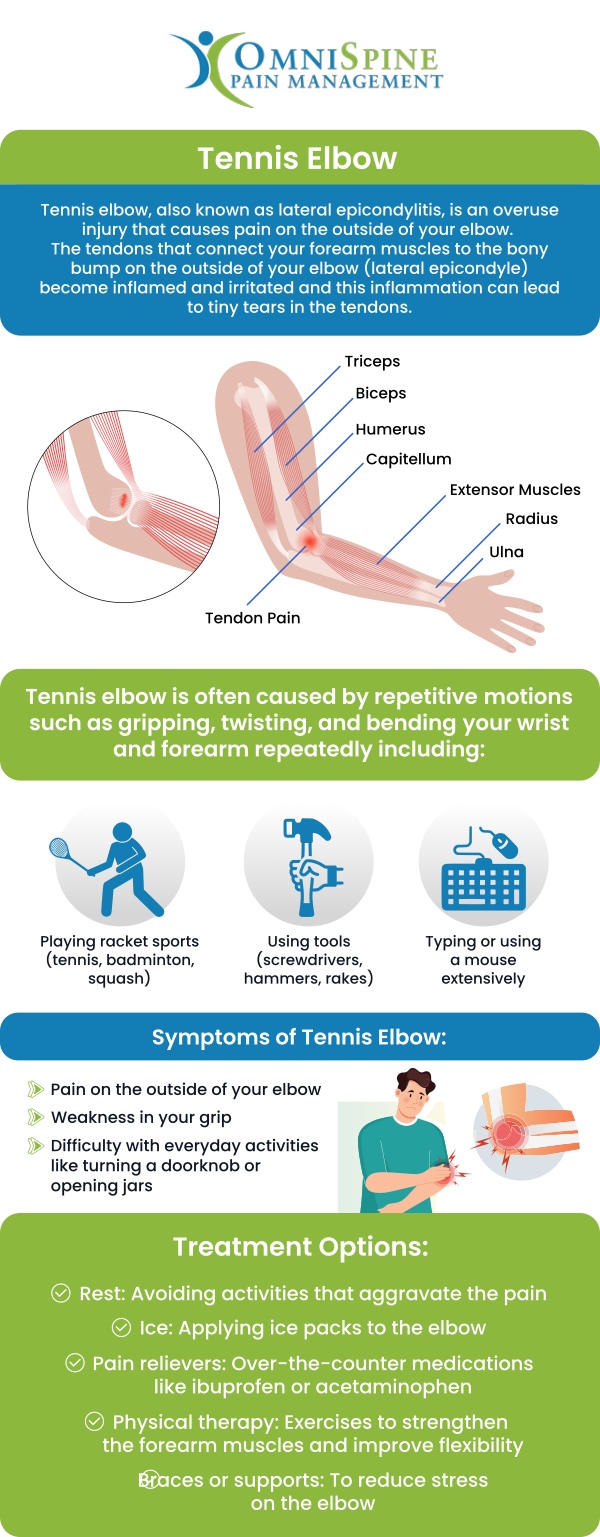
Table of Contents:
What is tennis elbow, and what causes this condition?
How can repetitive arm movements contribute to tennis elbow?
What symptoms may indicate a tendon-related concern from tennis elbow?
How is tennis elbow diagnosed during a medical evaluation?
Comprehensive, non-surgical treatments for Tennis Elbow
How can a personalized treatment plan support recovery and improved arm function?
How can Dr. Andrew Morchower, MD, MPH provide evaluation and treatment for tennis elbow in Sunnyvale, TX?
Do I have to play tennis to get tennis elbow?
What are the most common symptoms of tennis elbow?
How is tennis elbow diagnosed at OmniSpine Pain Management?
How does a personalized treatment plan help my elbow recover?
What to Expect at Your First Visit in Sunnyvale, TX
Tennis elbow is a condition that causes discomfort around the outer portion of the elbow due to changes affecting the tendons connected to the forearm muscles. Despite its name, it is not limited to tennis players and may occur in individuals who perform repeated arm or wrist movements.
Common contributing factors may include repetitive gripping, frequent lifting, certain work activities, and motions that place ongoing stress on the elbow area. Symptoms may develop gradually as the tendons experience repeated strain over time.
At OmniSpine Pain Management, our team evaluates the possible causes of tennis elbow symptoms and provides personalized care recommendations based on each patient’s condition.
Repetitive arm movements can contribute to tennis elbow by placing repeated stress on the muscles and tendons around the elbow. Activities involving frequent gripping, wrist extension, lifting, or repeated use of the forearm may increase strain in this area.
People who perform certain occupational tasks, recreational activities, or daily motions involving repetitive arm use may be more likely to experience symptoms. Understanding activity patterns can help healthcare professionals identify possible contributing factors.
At OmniSpine Pain Management, our team considers each patient’s lifestyle and daily activities when evaluating tennis elbow and developing an individualized treatment approach.
Symptoms of tennis elbow may include discomfort on the outside of the elbow, tenderness in the affected area, or pain that becomes noticeable during activities involving the hand, wrist, or forearm. Some individuals may also experience reduced grip strength or difficulty performing certain movements.
Possible symptoms may include:
● Pain while gripping objects
● Discomfort during lifting activities
● Tenderness around the outer elbow
● Increased symptoms with repeated arm use
A professional evaluation can help determine whether symptoms are related to tennis elbow or another condition affecting the arm.
At OmniSpine Pain Management, our team provides comprehensive assessments to help patients understand the source of their elbow discomfort.
Tennis elbow is typically evaluated through a review of symptoms, medical history, and physical examination. A healthcare professional may discuss when symptoms began, what activities increase discomfort, and how the condition affects daily movement.
During an evaluation, the physician may assess areas of tenderness, arm movement, and function to better understand the patient’s condition. Additional evaluations may be considered when needed based on individual symptoms.
At OmniSpine Pain Management, our team uses a personalized evaluation process to help determine appropriate care options for patients experiencing tennis elbow symptoms.
Non-surgical treatment options for tennis elbow may focus on reducing discomfort, improving function, and addressing factors that contribute to symptoms. Recommended approaches depend on the severity of the condition and each patient’s individual needs.
Possible options may include:
● Activity adjustments
● Medication management when appropriate
● Supportive therapies
● Targeted pain management treatments
● Personalized rehabilitation strategies
A customized treatment plan allows care recommendations to match the patient’s symptoms, goals, and lifestyle.
At OmniSpine Pain Management, our team provides individualized treatment guidance to help patients explore non-surgical options for managing tennis elbow.
A personalized treatment plan supports recovery by addressing the specific factors contributing to each patient’s tennis elbow symptoms. Since symptoms and causes can vary, individualized care helps ensure treatment recommendations are aligned with personal needs.
A customized approach may focus on improving comfort, supporting movement, and helping patients return to daily activities with greater confidence. Ongoing evaluation allows treatment plans to be adjusted as progress is made.
At OmniSpine Pain Management, our team develops personalized care strategies focused on helping patients manage elbow symptoms and improve overall arm function.
Dr. Andrew Morchower, MD, MPH, provides tennis elbow evaluation by reviewing each patient’s symptoms, medical history, and lifestyle factors that may contribute to elbow discomfort. Our practice focuses on understanding the individual needs of every patient before recommending treatment options.
Through comprehensive assessments and personalized pain management support, patients can better understand their condition and explore appropriate care approaches. Our team emphasizes communication, education, and individualized treatment planning.
At OmniSpine Pain Management, Dr. Andrew Morchower, MD, MPH, and our team provide tennis elbow evaluation and treatment support for patients in Sunnyvale, TX, and surrounding communities. We are committed to helping individuals improve comfort, mobility, and daily function through personalized pain management care.
No. While it is common among athletes, tennis elbow is caused by any repetitive arm, wrist, or gripping movement that strains the forearm tendons. Many patients in Sunnyvale develop this condition from frequent lifting, typing, or specific occupational and daily tasks.
The most frequent symptom is tenderness or discomfort on the outside of the elbow. You may also experience a noticeable decrease in grip strength, pain when lifting objects, or worsening discomfort during repetitive arm movements.
Dr. Andrew Morchower diagnoses tennis elbow through a comprehensive medical evaluation. This includes reviewing your medical history, discussing the daily activities that trigger your pain, and performing a physical examination to pinpoint areas of tenderness and assess your arm’s function.
Because the exact cause and severity of elbow pain vary from person to person, a customized plan addresses your specific lifestyle and physical needs. This tailored approach allows Dr. Morchower to adjust therapies as you progress, ensuring you can return to your daily activities safely and with greater comfort.
Your journey to pain relief begins with a comprehensive, personalized assessment at our Sunnyvale clinic. Dr. Andrew Morchower, MD, MPH and the OmniSpine Pain Management team take the time to listen to your unique symptoms, review your medical history, and understand how your pain is impacting your daily life.
During your consultation, we will perform a physical examination to test your arm’s range of motion, grip strength, and specific areas of tenderness. If necessary, we may utilize on-site diagnostic imaging to rule out other conditions, such as arthritis or nerve compression. By the end of your visit, you will have a clear understanding of your diagnosis and a customized, step-by-step pain management plan designed to restore your elbow function and get you back to living comfortably. For more information, contact us today or book an appointment online. We are conveniently located at 270 S Collins Rd, #200 Sunnyvale, TX 75182.
We serve patients from Sunnyvale, TX, Rockwall, TX, Garland, TX, Rowlett, TX, Kaufman, TX, Forney, TX, Heath, TX, and surrounding areas.
Check Out Our 5 Star Reviews



 Send Text
 How May I Help You?
